
Customized Solutions to Increase Your Press Brake Productivity
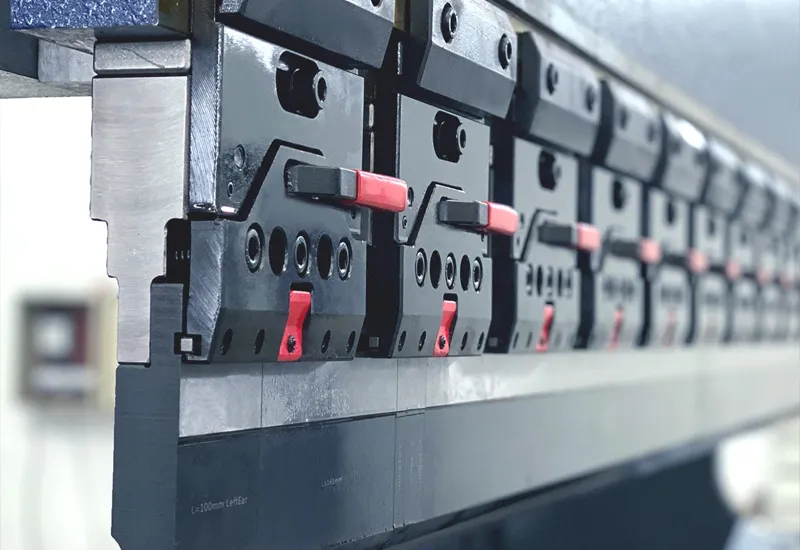
The fast clamping system can satisfy any needs, and therefore it represents the best choice for users that frequently change punches on their press brake machine and improve productivity.
Manual Upper Tool Clamping:
LONGBOW CNC press brake use all Raw material is provided by qualified suppliers and chemical composition corresponds to international standards.Therefore, raw material yield and tensile strength are guaranteed.are standardized with a 8.4 x 3.5 mm safety groove, which keeps the tool from falling out.
Advantage:
- Safe and fast tool change
- Can be used without modifying Europe type punches
- Front clamp – vertical tool change
- Rear clamp – horizontal tool change
Inspection Standards For Bending Machine Molds
- Material Quality
Verification of raw material specifications and certifications.
Inspection for any material defects such as cracks, inclusions, or impurities.
- Surface Finish
Assessment of surface smoothness and finish quality.
Inspection for surface defects such as scratches, dents, or corrosion.
Verification of any surface treatments or coatings.
- Hardness and Strength
Testing for hardness to ensure the press brake tooling meets specified hardness requirements. Verification of mechanical properties such as tensile strength and impact resistance.
- Compliance with Standards
Ensuring press brake tools meet relevant industry standards and regulations (e.g., ISO, ASTM). Adherence to any customer-specific requirements or specifications.
- Wear Resistance
Evaluation of the press brake tool’s wear resistance properties. Testing for durability under high-stress conditions.
- Dimensional Accuracy
Measurement of press brake tooling dimensions (length, width, height) to ensure they meet design specifications.
Tolerance checks for critical dimensions.
Verification of angle accuracy for punches and dies.
- Functionality and Performance
Testing the press brake tooling under simulated or actual operating conditions to ensure proper functionality.
Performance tests such as forming tests to verify the tool’s effectiveness in bending operations.
- Traceability and Documentation
Maintenance of thorough documentation for each batch of press brake tools, including inspection reports and certificates of compliance.
Traceability of each press brake tooling to its raw material batch and production processes.
- Alignment and Fit
Checking the alignment of the tool components to ensure they fit together properly. Verification of compatibility with specific press brake machines.

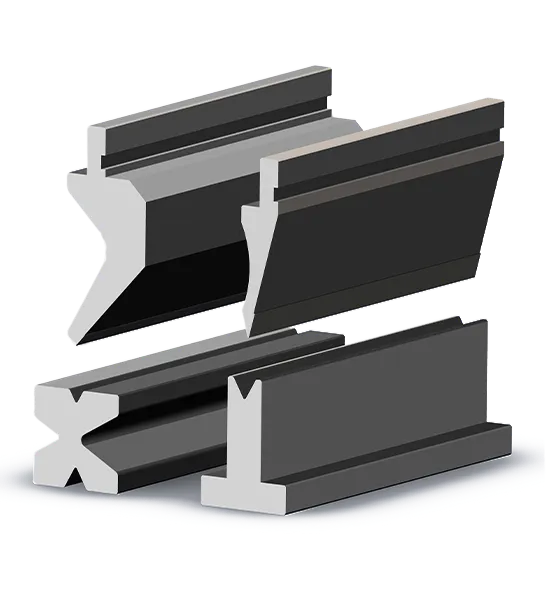
AMADA
Typically installed on major bending machines in Europe and Asia, providing efficient tooling systems. Customized services under the AMADA brand are available.
BYSTRONIC
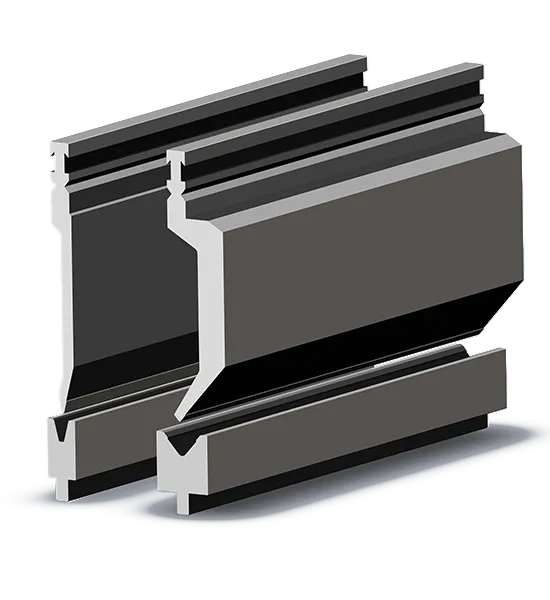
Bystronic/Beyeler bending machine tools are tool systems for Beyeler bending machines, featuring efficient clamping systems and support for solving production bending tasks. Customized services under the BYSTRONIC brand are available.
TRUMPF/WILA
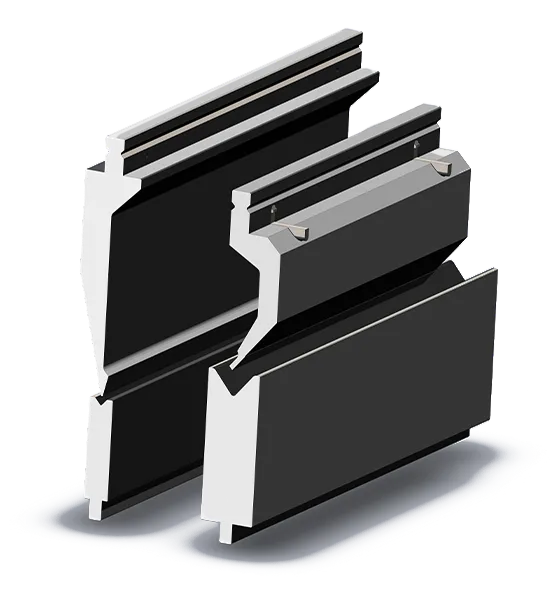
The Trumpf/Wila press brake tool is the second most common clamping system and is equipped with a lock button (or safety pin) for easy insertion and removal of punches. Customized services under the TRUMPF/WILA brand are available.
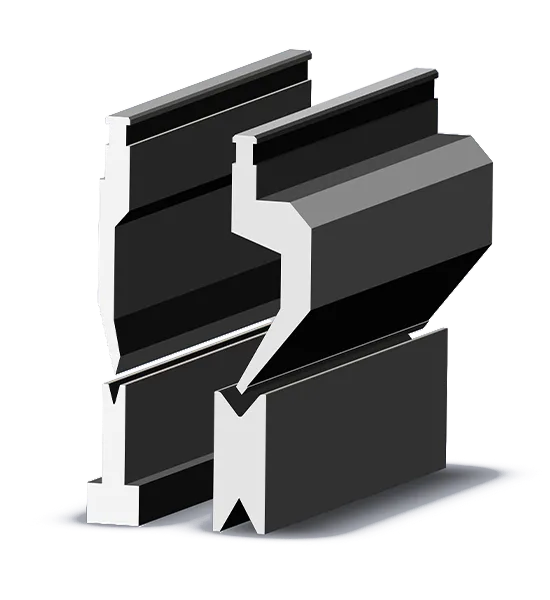
EHT/LVD
LVD/EHT press brake tools are high quality tools produced by LVD and EHT, using advanced design and manufacturing technology to meet a variety of bending needs. Customized services under the LVD/EHT brand are available.
EHT/LVD
Transportation And Packaging Requirements For Bending Machine Molds
Cushioning Materials: Use foam, bubble wrap, or other cushioning materials to protect tools from impact and vibration during transit.
Rigid Containers: Pack tools in sturdy, rigid containers made of wood, metal, or high-strength plastic to prevent bending or breakage.
Custom Fitting: Ensure that the packaging is custom-fitted to the specific shape and size of the tooling to prevent movement within the container.
Rust Inhibitors: Apply rust inhibitors or protective oils to the tooling before packaging to prevent corrosion.
Sealed Packaging: Use vacuum-sealed bags or airtight packaging to protect against humidity and moisture ingress.
Clear Labeling: Each package should be clearly labeled with details such as the tool type, dimensions, material, and order number.
Handling Instructions: Include clear handling and unpacking instructions to ensure safe and proper handling by the recipients.
Compliance with Regulations: Ensure that the packaging complies with all relevant transportation and safety regulations, such as those from OSHA or international shipping standards.
Weight Distribution: Distribute the weight evenly within the package to avoid imbalance and potential hazards during handling and transportation.
Recyclable Materials: Use recyclable or biodegradable packaging materials to reduce environmental impact.
Minimal Packaging: Optimize packaging design to use the minimum amount of material necessary to provide adequate protection, reducing waste and shipping costs.
Inspection: Conduct a final inspection of the packaged tooling to ensure all packaging standards are met and there is no damage or defect.
Wooden Crates: Often used for larger, heavier tooling, providing strong protection and easy handling with forklifts.
Mark: Use mark for easy tracking and inventory management.
Shipping Information: Clearly display shipping information, including destination address, contact details, and any special instructions, on the outside of the package.