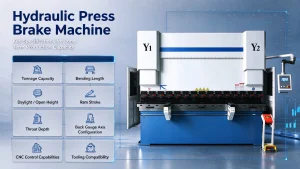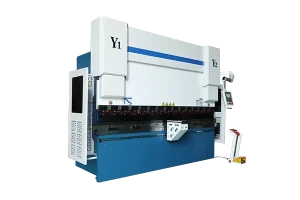
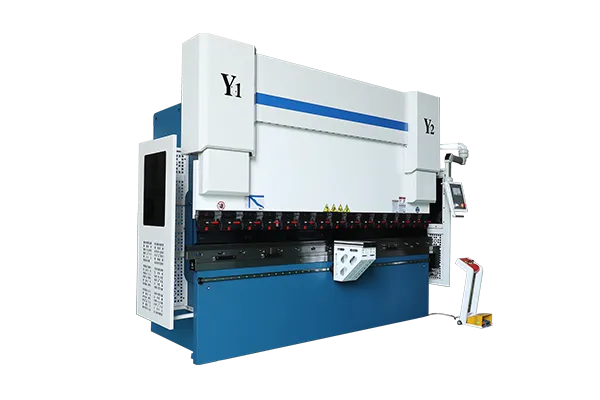
The tonnage of CNC press brakes refers to the maximum force it can exert during the bending process, measured in tons. This specification determines the machine’s bending capacity, impacting the types of materials, thicknesses, and applications it can handle.
1. What is the Tonnage in CNC Press Brakes
Tonnage represents the force a CNC press brake applies to bend a sheet of metal. It is directly related to the machine’s hydraulic or mechanical power system.
Key characteristics of tonnage:
- Determines the maximum material thickness the press brake can bend.
- Influences the length of the bend, especially for thicker materials.
- Impacts the selection of tooling and die setups.
The required tonnage depends on factors such as material type, thickness, bend length, and desired bend radius.
2. Material and Tonnage Requirements
Different materials have varying levels of resistance to bending, known as their tensile strength. For instance:
- Aluminum: Requires lower tonnage due to its lower tensile strength.
- Steel: Needs higher tonnage because of its greater resistance.
- Stainless Steel: Demands even more tonnage due to its high strength and durability.
Accurately calculating tonnage ensures the press brake can handle the material without causing damage to the machine or tools.

3. Impact on Bending Length and Thickness
The tonnage of a press brake also dictates the maximum bending length and material thickness it can accommodate.
Example scenarios:
- A 50-ton press brake might handle thin sheets of aluminum over a long bending length.
- A 200-ton press brake is better suited for bending thick steel plates, especially for shorter lengths.
For longer bending lengths, tonnage requirements increase exponentially. Therefore, understanding the relationship between tonnage and bending parameters is crucial for selecting the right machine.

4. Tooling Considerations
Tonnage influences tooling selection, including punch and die compatibility. Overloading tooling with excessive tonnage can result in:
- Tool deformation or breakage.
- Inconsistent bends or material defects.
- Increased wear and maintenance costs.
To avoid these issues, use tooling rated for the specific tonnage of the press brake.
5. Tonnage and Accuracy
While higher tonnage machines can handle thicker and harder materials, excessive force can compromise bending accuracy.
Why this happens:
- Increased tonnage can lead to tool deflection or misalignment.
- Precision is harder to maintain at extreme force levels.
Advanced CNC press brakes mitigate these challenges with features like real-time monitoring and force distribution systems.
6. Energy Efficiency and Operating Costs
Higher tonnage press brakes generally consume more energy and require robust hydraulic systems. For operations dealing primarily with thinner materials, using a machine with excessive tonnage results in unnecessary energy expenditure and higher operating costs.
Selecting a press brake with appropriate tonnage ensures energy efficiency and cost-effectiveness.
7. Safety Implications
Incorrectly assessing tonnage requirements can lead to unsafe operating conditions:
- Overloading a machine beyond its rated capacity increases the risk of hydraulic failure or structural damage.
- Insufficient tonnage can cause incomplete bends or material slippage, endangering operators.
Always adhere to the manufacturer’s tonnage guidelines to maintain safety.
8. How to Calculate Tonnage for Your Needs
The conventional tonnage calculation method is to take iron plate as an example
Tonnage = 1.25 * 6.5 * Material Thickness(mm) * Material Length(M)
For instance, a 200-ton CNC press brake can bend a 10mm thick iron plate over a length of 2500mm.
Conclusion
The tonnage of CNC press brakes is a key determinant of its bending capabilities, which affects material type, thickness, bending length, tooling, and overall performance. You can choose CNC press brakes with the right tonnage based on your needs.
You can also visit our website to choose from a variety of metal bending applications. If you don’t know how to choose, you can also contact our bending machine experts at sales@longbowmachine.com