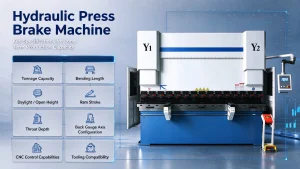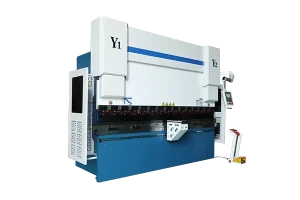
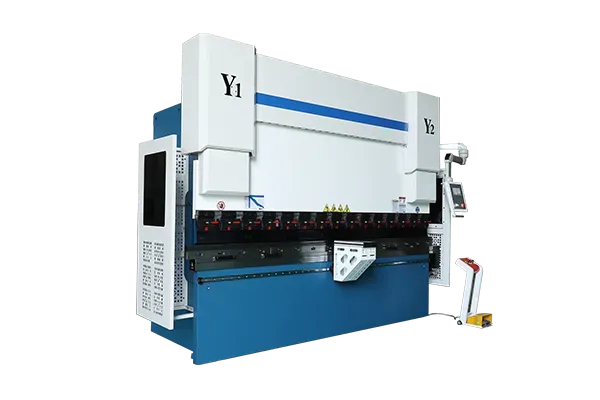
Hydraulic press brakes utilize strong hydraulic force to bend metal sheets into various shapes with high accuracy. Choosing the right tonnage and bending capacity is crucial, as it significantly impacts your production efficiency, product quality, and operational costs.
In this comprehensive blog, we’ll explore key factors affecting press brake tonnage, methods to calculate the required bending force, how to choose the best hydraulic press brake for your applications, and practical suggestions to optimize your bending processes.
Key Factors Affecting Tonnage and Bending Capacity
Material Type and Thickness
Different metals require varying bending pressures due to their unique properties, particularly yield strength—the resistance of a material to permanent deformation. Metals like aluminum or mild steel are easier to bend compared to stainless steel or high-strength alloys, which require significantly higher tonnage.
Thickness also plays a vital role. The thicker the sheet metal, the higher the tonnage needed to bend it. It’s crucial to know your material’s tensile and yield strength, allowing you to select the appropriate hydraulic press brake and tooling to execute precise bends without material damage or excessive strain on the equipment.
Bending Length
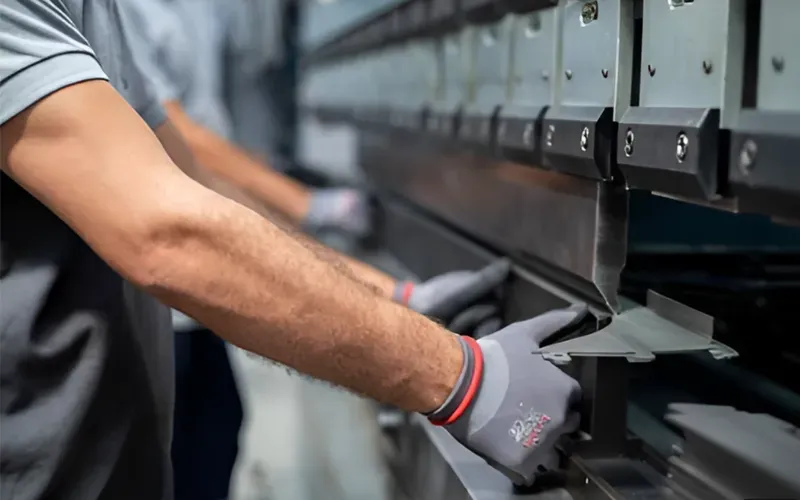
The length of the metal sheet you’re bending directly influences the required tonnage. Longer bends necessitate higher bending forces. When determining your hydraulic press brake’s capacity, always base your calculations on the longest bend you plan to execute regularly.
Ensuring your press brake has adequate bending length and tonnage capacity helps avoid the pitfalls of uneven bending pressure distribution, which results in inaccurate bends and poor-quality fabrication. If you typically work with large-scale parts or sheet metals, investing in a larger machine with greater tonnage and length capacity will significantly boost your productivity and quality.
Bending Angle
The bending angle you aim to achieve influences the tonnage required significantly. Sharp bends of 90 degrees or smaller typically require higher tonnage, while shallower angles and gentle curves require less force.
V-shaped dies—standard tooling in press brake operations—come in various sizes depending on the desired angle and material thickness. The choice of your die opening (V-width) significantly impacts required bending force: larger die openings require less bending pressure, while smaller openings demand increased force. Therefore, carefully selecting dies according to your materials and target angles can optimize your productivity and lower operational expenses.
Minimum Inner Radius
The ductility of your chosen material affects the minimum inner bending radius achievable without damaging the metal. More ductile materials allow for tighter bends without cracks or distortions, while harder metals require larger inner radii, demanding higher tonnage.
By clearly understanding your material’s ductility, you can accurately select hydraulic press brakes and tooling that match your production requirements, ensuring high-quality fabrication without compromising material integrity or equipment longevity.
Methods for Calculating Bending Tonnage Basic Bending Tonnage Calculation Formula
A fundamental method for determining required bending tonnage involves a simple formula:
Bending Force (Tons) = (Material Tensile Strength × Material Thickness² × Bending Length) ÷ (Die Width × Factor)
Let’s clarify what each parameter means:
- Material Tensile Strength: The resistance of your metal sheet against breaking under tension.
- Material Thickness: Measured in millimeters or inches.
- Bending Length: The length of the bend line.
- Die Width (V-opening): The width of the die’s opening you’re using.
- Factor: A constant derived from industry standards (usually 1.42 for metric units and 8 for imperial units).
Using this formula, you can quickly estimate your required hydraulic press brake tonnage and ensure accurate and effective bending operations.
Using Bending Force Calculation Charts
To simplify calculations, many fabricators refer to industry-standard bending force charts. These charts provide quick references that correlate material thickness, die openings, and bending lengths to the required tonnage for common metals such as mild steel, stainless steel, and aluminum.
These charts, widely available online and through machinery suppliers, are an efficient way to speed up your production planning without complex calculations. They are especially useful for standard bending tasks and common metal types, enabling rapid and reliable determinations of your hydraulic press brake’s required capacity.
Effects of Different Bending Methods
Hydraulic press brakes commonly employ three bending techniques: air bending, bottom bending, and coining.
- Air Bending: Uses less tonnage, offering flexibility in angle adjustments.
- Bottom Bending: Requires higher tonnage as metal contacts the bottom of the die, providing more accurate angles.
- Coining (or stamping): Demands the highest tonnage, pressing metal completely into the die for extremely precise bends.
Understanding the differences helps you choose the right bending method and accurately calculate the necessary hydraulic press brake tonnage to achieve desired quality and efficiency.
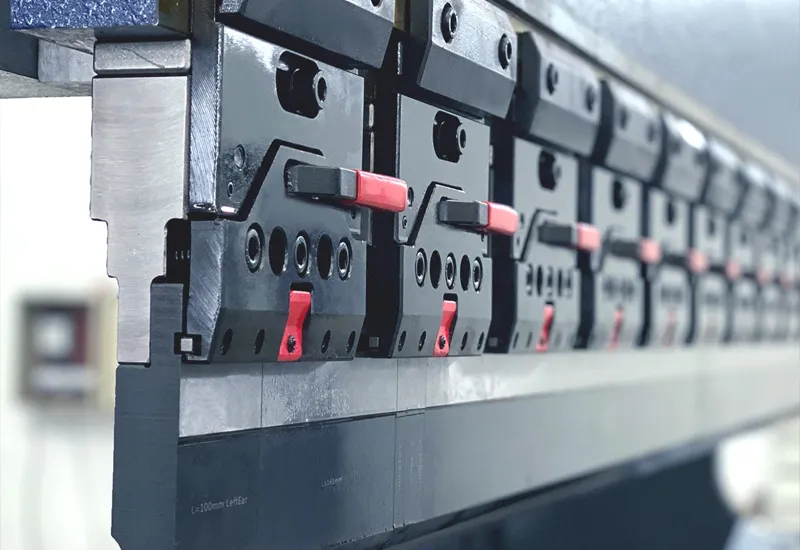
Choosing a Suitable Hydraulic Press Brake
1. Determine Tonnage Range by Your Production Needs
Assess your production demands clearly. If you regularly bend thick, high-strength metals, choose a hydraulic press brake with higher tonnage capacity. Conversely, for lightweight sheet metal tasks, a machine with lower tonnage is economical and practical.
2. Selecting the Right Hydraulic Press Brake Type
Hydraulic press brakes are categorized into conventional hydraulic and CNC hydraulic press brakes. Conventional hydraulic models are cost-effective and reliable for simple, repetitive tasks. However, CNC hydraulic press brakes offer advanced control systems, quick setups, high precision, and enhanced productivity, ideal for complex and diverse projects.
3. Plan for Future Business Growth
Consider your long-term business strategy. It’s wise to invest in a hydraulic press brake that accommodates your future growth and diversified operations. Choosing a slightly larger machine today can save you considerable reinvestment costs down the road, ensuring sustained productivity and flexibility.
Optimize Tooling to Minimize Tonnage Needs
Proper tooling selection directly influences required tonnage. By choosing optimal die widths and configurations, you can significantly reduce bending force necessities, enhancing your machine’s longevity and operational efficiency. Investing in high-quality, versatile tooling enhances productivity and minimizes downtime.
Efficient Scheduling to Maximize Equipment Utilization
Strategically scheduling tasks based on material types and thicknesses helps optimize your hydraulic press brake’s utilization rate. Grouping similar projects reduces tooling changeovers and downtime, boosting productivity and profitability effectively.
At LONGBOW, we provide advanced and reliable hydraulic press brakes tailored to your specific needs. For expert assistance in selecting the perfect press brake solution for your operations, contact LONGBOW today.