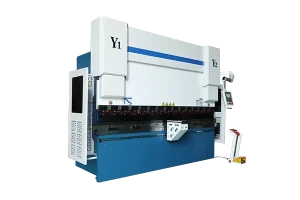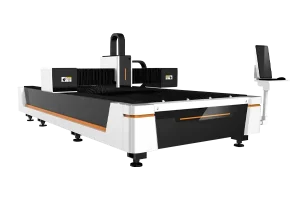
Shearing machines are essential tools in metal fabrication and sheet processing. They provide clean, precise cuts for various materials, ensuring efficiency in manufacturing, automotive, construction, and aerospace industries.
Two common types of shearing machines are the CNC shearing machine and the manual shearing machine. While both serve the same purpose—cutting metal sheets—their working principles, precision, efficiency, and cost differ significantly.
This article compares CNC and manual shearing machines, highlighting their key differences, advantages, and ideal applications. Understanding these distinctions will help businesses and operators choose the most suitable machine for their specific needs.

What Is a CNC Shearing Machine?
A CNC shearing machine is an automated sheet-cutting tool controlled by a computer numerical control (CNC) system. It is designed for high-precision, high-efficiency operations in industrial manufacturing.
Key Features of CNC Shearing Machines
- Automated and highly precise – The CNC system eliminates manual errors, ensuring consistent accuracy.
- Capable of handling complex cutting tasks – Ideal for customized designs and intricate patterns.
- Integrated with CAD/CAM software – Allows for seamless design-to-cutting execution, reducing setup time.
- Programmable for multiple cuts – Enhances workflow efficiency in large-scale production.
- CNC shearing machines are widely used in automotive, aerospace, and heavy machinery industries, where precision and efficiency are critical.
What Is a Manual Shearing Machine?
A manual shearing machine is a mechanically operated cutting tool that relies on human effort to position and cut metal sheets. It is commonly used in small workshops and low-production environments.
Key Features of Manual Shearing Machines
- Simple and cost-effective – Requires minimal investment and maintenance.
- Operator-dependent precision – Cutting accuracy varies based on manual alignment and control.
- Best for small-scale tasks – Suitable for basic cutting needs in workshops and repair shops.
- No need for complex programming – Can be used immediately without software integration.
- Manual shearing machines are ideal for cutting thin metal sheets and performing basic fabrication tasks where automation is not necessary.

Main Differences Between CNC Shearing Machines and Manual Shearing Machines
- Precision and Accuracy in Cutting
One of the most significant differences lies in the precision and accuracy each machine offers. CNC shearing machines excel in delivering highly accurate and consistent cuts. This is achieved through their automated, computer-controlled operation. Once programmed, the machine executes the shearing process with minimal deviation, ensuring each piece is cut to the specified dimensions with remarkable consistency. This level of precision is crucial for applications requiring tight tolerances and uniformity.
Manual shearing machines, on the other hand, are inherently less precise. The accuracy of the cut is heavily dependent on the operator’s skill, experience, and attentiveness. Subtle variations in manual force, blade alignment, and material positioning can lead to inconsistencies in the cut dimensions. While a skilled operator can achieve acceptable results for many tasks, manual machines are generally not suited for applications demanding the utmost precision and uniformity across multiple pieces.
- Speed, Efficiency, and Throughput
CNC shearing machines demonstrably outperform manual machines in terms of speed and efficiency. Their automated operation allows for rapid and continuous shearing, significantly increasing production throughput. CNC machines can handle repetitive tasks and complex cutting patterns efficiently, minimizing downtime and maximizing output. This makes them ideal for large-scale production environments or projects with tight deadlines.
Manual shearing machines are considerably slower due to their reliance on manual operation. Each cutting cycle requires operator input and physical exertion, which inherently limits the speed and overall efficiency. While suitable for smaller batches or prototyping, manual machines are less efficient for high-volume production runs where time and output are critical factors.
- Cost Considerations: Initial Investment and Long-Term Expenses
The initial investment for a CNC shearing machine is significantly higher than that of a manual shearing machine. CNC machines incorporate advanced technology, automation systems, and complex components, leading to a higher purchase price. Furthermore, CNC machines may incur higher maintenance costs due to their sophisticated mechanics and electronics, potentially requiring specialized technicians for upkeep and repairs.
Manual shearing machines are more budget-friendly upfront, representing a lower initial investment. Their simpler design generally translates to lower maintenance costs as well, as repairs are often less complex and can be handled by in-house personnel. However, while the initial cost is lower, the long-term operational costs per unit may be higher for manual machines when considering labor expenses and lower production volume.
- Operational Complexity and Skill Requirements
Operating a CNC shearing machine is generally considered simpler in terms of direct physical skill. Once programmed, the machine largely operates autonomously, reducing the need for highly specialized manual dexterity during the cutting process itself. While programming and machine setup require training, the daily operation for routine tasks can be relatively straightforward for trained personnel.
Manual shearing machines demand skilled and experienced operators. Achieving accurate and consistent cuts requires a deep understanding of shearing techniques, material properties, and manual control over the machine. Operator fatigue can also impact performance, especially during prolonged use. The skill level of the operator is directly linked to the quality and consistency of the output from a manual shearing machine.
- Flexibility and Adaptability to Diverse Tasks
CNC shearing machines showcase remarkable flexibility and adaptability. Their programmability allows for easy adjustments to handle a wide range of cutting tasks, including complex shapes and varying material thicknesses. Reprogramming the machine for different projects is relatively quick and efficient, enabling seamless transitions between diverse jobs. This adaptability makes CNC machines suitable for environments with varied production needs and intricate designs.
Manual shearing machines are less versatile in comparison. They are best suited for simpler, straight cuts on consistent material thicknesses. Adapting to significantly different materials or complex shapes can be challenging and time-consuming with manual machines. Their limited flexibility makes them less ideal for environments requiring frequent changes in project specifications or intricate cutting patterns.
Summary of Advantages and Disadvantages
CNC Shearing Machine
- Advantages: The CNC shearing machine offers high precision, efficiency, and automation, making it ideal for large-scale production and complex cutting tasks. It can handle a wide range of materials with minimal human intervention, ensuring consistency and accuracy.
- Disadvantages: The main drawbacks include higher costs and a need for skilled operators to manage and maintain the equipment, which can make it less accessible for smaller operations.
Manual Shearing Machine
- Advantages: Manual shearing machines are more affordable and easier to operate, making them suitable for smaller businesses or less frequent use. They require minimal training and are generally simpler to maintain.
- Disadvantages: However, they offer lower precision and slower cutting speeds, which can affect overall efficiency, especially in larger or more demanding projects.
Conclusion
Choosing between a CNC shearing machine and a manual shearing machine depends on factors such as budget, production requirements, precision needs, and operator expertise.
A CNC shear is ideal for high-precision, high-volume, and automated cutting tasks in large-scale industries. A manual shear is better suited for low-cost, small-scale, and simple cutting operations in workshops and repair facilities. Both machines play essential roles in metal fabrication. Understanding their strengths and limitations ensures the best investment for specific business needs.
For expert guidance on shearing machines and customized metal-cutting solutions, feel free to contact us today.