In the world of metal fabrication, bending accuracy is everything. Whether you’re manufacturing components for aerospace, automotive, or general engineering, the press brake you choose can have a profound impact on quality, efficiency, and consistency. Among the options available today, precision press brakes have emerged as the go-to choice for high-performance bending. But what exactly sets them apart from conventional press brakes?
This article explores the key differences between precision press brakes and conventional models, helping you make an informed decision for your production needs.
What Is a Precision Press Brake?
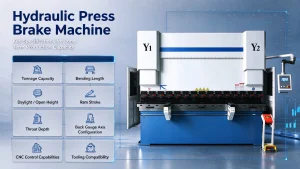
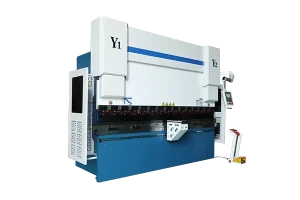
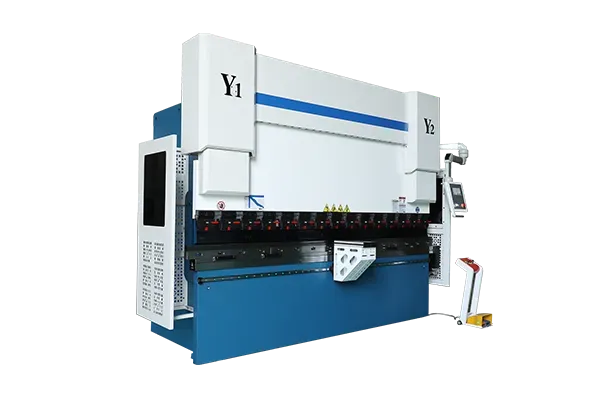
A precision press brake is a high-accuracy metal bending machine that uses advanced control systems (typically CNC) to achieve extremely tight tolerances. These machines are designed for demanding applications where repeatability, speed, and efficiency are essential. Precision press brakes are widely used in industries such as aerospace, electronics, medical equipment, and automotive manufacturing.

In contrast, a conventional press brake is typically manually controlled or uses basic programmable logic. While still effective for basic bending tasks, it lacks the advanced automation and repeatability of a precision model.
Precision Press Brake vs. Conventional Press Brake
| Feature | Precision Press Brake | Conventional Press Brake |
| Control System | CNC (Computer Numerical Control) | Manual or semi-automatic |
| Bending Accuracy | ±0.0004 inch (±0.01 mm) | ±0.01 inch (±0.25 mm) |
| Repeatability | High (ideal for mass production) | Moderate |
| Setup Time | Shorter with automatic tool adjustments | Longer due to manual setup |
| Automation | High (supports auto crowning, backgauge) | Low or none |
| Operator Skill Required | Low to medium (system guides the user) | High (relies on manual experience) |
Bending Accuracy and Repeatability
The biggest selling point of a precision press brake is its unmatched accuracy. These machines are equipped with:
- CNC backgauges
- Servo-driven hydraulic or electric systems
- Real-time angle measuring systems
- Automatic compensation (like crowning)
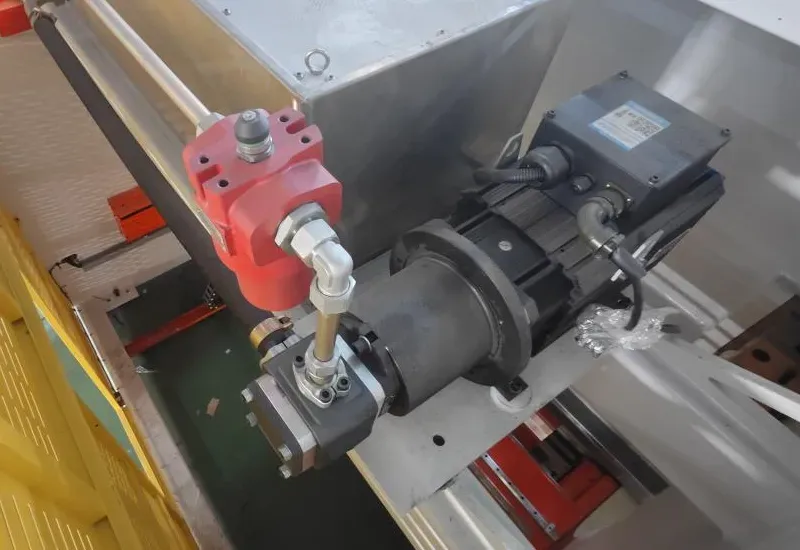
These features work together to produce consistent bends across all parts, reducing scrap and rework. Conventional press brakes, while still functional, often require operator adjustments and trial-and-error setups, which can lead to variation in part quality.
Ease of Use and Setup Time
Precision press brakes streamline production with automated setup, including tool positioning, pressure control, and angle correction. Some even come with offline programming software, allowing you to design and simulate bends before touching the machine.
Conventional press brakes, by contrast, rely heavily on operator experience for setup and operation. Tool changes, positioning, and angle adjustments are done manually, resulting in longer downtime and greater chances of error—especially in small batch or varied production environments.
Production Efficiency and Cost Savings
Although precision press brakes often require a higher upfront investment, they offer long-term savings through:
- Faster cycle times
- Reduced operator training requirements
- Lower material waste
- Greater throughput for high-volume projects
For shops focused on custom projects or low-volume, basic tasks, conventional press brakes can still be cost-effective. But for operations where time, quality, and consistency matter, a precision model quickly pays for itself.
Applications and Industries
Precision press brakes are essential in industries that demand strict tolerances:
- Aerospace: Precision forms for fuselage and wing parts
- Medical: Clean, accurate bends for stainless steel surgical tools
- Automotive: Rapid and consistent production of structural components
- Electronics: Tight bends in thin sheet metal enclosures
Conventional press brakes, on the other hand, are more common in:
- Custom job shops
- Metal furniture and architectural metalwork
- General fabrication where tolerances are less critical
Which One Is Right for You?
The right press brake depends on your application, budget, and production goals.
Choose a precision press brake if:
- You require high-volume production with minimal variation
- Tolerances are tight and quality control is strict
- You want to future-proof your production line with automation
Stick with a conventional press brake if:
- You run small batches or custom jobs
- Budget constraints are critical
- Operator expertise is readily available
Conclusion
Precision press brakes offer unmatched accuracy, automated functionality, and consistent bending results—making them the ideal solution for manufacturers who prioritize performance and precision.
By understanding the differences between precision press brakes and conventional press brakes, you can make a strategic investment that boosts productivity, reduces material waste, and positions your business for long-term success.
Ready to upgrade your bending capabilities?
Explore our full range of precision press brake solutions today or contact our experts for a custom recommendation tailored to your production needs.