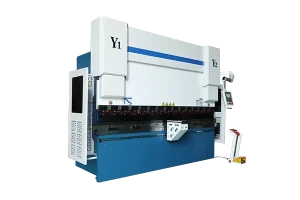
Press Brakes are essential tools in metalworking, used to shape and form metal sheets into precise angles and curves. They play a critical role in industries such as automotive, construction, and manufacturing, where accurate metal shaping is required for various components. The process of bending involves applying force to a metal sheet, causing it to bend along a predefined axis.

This article will focus on comparing electric press brakes with traditional hydraulic press brakes. While both types serve the same purpose, they differ in their mechanisms and performance characteristics. Electric press brakes are gaining popularity due to their energy efficiency, precise control, and reduced environmental impact compared to traditional hydraulic models. These advantages make electric machines a preferred choice for modern manufacturing environments seeking to reduce operational costs and improve productivity.
Working Principle of Electric Press Brake
Electric press brakes use servo motors and ball screws to control the movement of the ram, offering a more efficient and precise alternative to traditional hydraulic models. Instead of relying on hydraulic fluid pressure to generate force, electric press brakes directly convert electrical energy into mechanical motion. This design eliminates the need for components like hydraulic pumps, valves, and oil reservoirs, simplifying maintenance and reducing the risk of leaks. The positioning and speed of the ram are precisely managed by a programmable CNC system, allowing for accurate adjustments and minimal energy consumption during operation.

In contrast, traditional hydraulic press brakes depend on hydraulic cylinders, which constantly operate the pump to maintain fluid pressure, leading to energy inefficiency, even during idle times. Additionally, hydraulic systems can face issues such as oil leaks, sensitivity to temperature fluctuations, and gradual pressure loss over time. Electric press brakes, however, provide force only when needed, offering greater energy efficiency and reducing the environmental impact associated with hydraulic systems. This makes electric models a more sustainable and cost-effective choice for many industries.
Main Advantages of Electric Press Brake
Energy Efficiency and Sustainability
Electric press brakes consume up to 80% less energy than hydraulic models. By eliminating hydraulic oil, they reduce the risk of environmental contamination and lower disposal costs. This aligns with global sustainability goals, making them ideal for eco-conscious manufacturers.
Superior Precision and Repeatability
CNC-driven electric systems achieve bending accuracies within ±0.01mm. Digital controls ensure consistent results across production runs, critical for industries like aerospace and medical device manufacturing. Operators can store and recall complex programs, minimizing setup time for repeat orders.
Reduced Maintenance Demands
Without hydraulic components, electric press brakes avoid common issues like oil leaks, pump failures, or valve blockages. Maintenance revolves around periodic lubrication and software updates, translating to lower downtime and long-term operational costs.
Quiet Operation and Enhanced Ergonomics
Electric models operate at noise levels below 75 dB, compared to the 85–90 dB typical of hydraulic systems. Reduced vibration and quieter environments improve worker comfort, fostering productivity and reducing fatigue-related errors.
User-Friendly Automation
Touchscreen interfaces simplify programming, even for intricate bends. Automated features like angle correction and crowning adjustments compensate for material variations, reducing reliance on operator skill. This automation streamlines workflows, especially for high-mix, low-volume production.
Space Optimization
Compact designs free up valuable floor space, a boon for smaller workshops. Integrated safety features and streamlined layouts further enhance workplace efficiency.
Versatility Across Applications
Electric press brakes adapt seamlessly to diverse materials, from thin aluminum sheets to high-strength steel. Adjustable parameters cater to custom projects, making them suitable for prototyping and specialized production runs.
Application Areas of Electric Press Brake
Electric press brakes have found extensive applications across various industries, owing to their precision, energy efficiency, and adaptability.

- Steel Industry: In steel manufacturing, electric press brakes are used for shaping and bending metal sheets into precise forms required for structural components, ensuring high accuracy in the production of steel structures, beams, and other elements.
- Automotive Manufacturing: Electric press brakes play a crucial role in the automotive industry, where they are used to bend metal sheets for car body parts, frames, and components. The high precision and speed of electric models are particularly beneficial in high-volume production environments.
- Home Appliances Manufacturing: Electric press brakes are commonly used in the production of metal parts for appliances such as refrigerators, air conditioners, and washing machines. The ability to produce precise bends and shapes is essential for creating durable and functional appliance casings.
- Electrical and Power Industry: In this sector, electric press brakes are used for shaping metal sheets for electrical cabinets, computer enclosures, and other power-related equipment. Their efficiency allows for rapid production and high-quality outcomes.
- Aerospace and Aviation: Precision is a key requirement in aerospace manufacturing, where electric press brakes are used to produce complex, high-tolerance parts for aircraft. The accuracy and repeatability offered by electric press brakes ensure that these parts meet the strict standards of the industry.
- Wind Power and Telecommunications: Electric press brakes are also employed in the production of components like wind turbine blades, communication towers, and signal poles, where consistent quality and precise bends are critical for performance and safety.
How to Choose a Suitable Electric Press Brake
When selecting an electric press brake for your operations, there are several key factors to consider to ensure you choose the right machine for your needs.

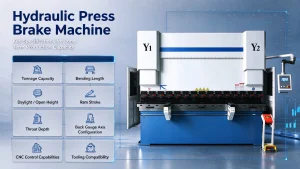
- Tonnage Capacity: The tonnage capacity refers to the amount of force the machine can apply to bend metal sheets. It’s essential to choose a press brake with sufficient tonnage to handle your specific material thickness and bending requirements. Generally, the thicker or tougher the material, the higher the tonnage required.
- Bed Length: The bed length is the area where the metal sheet is placed for bending. It’s important to select a press brake with a bed length that accommodates the largest sheet size you plan to work with. A longer bed length ensures you can handle a wider range of projects and larger materials.
- Backgauge System: The backgauge helps position the metal sheet precisely before bending, improving accuracy. Look for a press brake with an easy-to-use and precise backgauge system that can be adjusted quickly for different sheet sizes and thicknesses.
- Control System: A reliable and user-friendly control system is essential for programming bending operations. Choose a press brake with a control system that allows for precise adjustments of speed, pressure, and bending angles. Advanced features, such as automatic angle correction, can also enhance efficiency and accuracy.
- Safety Features: Press brakes can be dangerous if not properly handled, so ensure that the machine has robust safety features. Look for machines equipped with light curtains, emergency stop buttons, and interlock systems to protect operators and reduce the risk of accidents.
To learn more about the bending machine purchasing guide, you are welcome to ask our professional bending machine experts at any time at sales@longbowmachine.com or visit our website to browse various bending machines!