Choosing the right press brake tooling material to match these characteristics will not only protect the machine and reduce wear, but also ensure high repeatability and minimize rework.
This article will serve as a practical guide to help you navigate the world of press brake tooling materials. We’ll break down the common types, their characteristics, how to choose based on your specific application, avoid common mistakes, and what to look for in a reliable supplier. Whether you’re a seasoned pro or just getting started, this guide will help you make smarter, more cost-effective decisions in your bending operations.
Common Press Brake Tooling Material Types and Their Characteristics
When selecting press brake tooling, it’s important to understand the different material options available. Each tooling material brings its own set of strengths and limitations to the table. Let’s take a closer look at the most commonly used materials in press brake dies and punches.

Quenched Steel (e.g., 42CrMo, T8/T10)
Quenched steel is widely used in tooling thanks to its high hardness and excellent wear resistance.
Tools made from 42CrMo or T8/T10 can handle medium to large production runs without significant wear. However, the effectiveness of quenched steel largely depends on the quality of the heat treatment. Poor heat control can lead to internal cracks or uneven hardness, which may reduce tool life.
Precision Ground Tooling Materials
For applications where accuracy is everything—like in the automotive or aerospace sectors—precision-ground tooling is a go-to solution. These tools are processed to tight tolerances, which ensures consistent bending angles and minimal deviation.
This type of press brake tooling is often used when small radius bends or tight angle control is critical. While the cost is generally higher than standard options, the investment pays off in precision and repeatability.
High-Strength Alloy Steel
High-strength alloy steels are engineered to withstand extreme pressure and stress. They offer both toughness and resilience, making them ideal for bending thick plates or high-tensile materials. Their ability to absorb impact without cracking gives them an edge in heavy-duty applications.
These materials also resist fatigue, so they’re a smart choice for continuous production environments.
Surface-Coated Tooling (e.g., Nitrided or PVD-Coated)
Surface treatments like nitriding or PVD (Physical Vapor Deposition) coatings enhance the tool’s lifespan and performance. These coatings improve corrosion resistance and reduce friction between the tool and the workpiece. They also prevent soft metals like aluminum from sticking to the tooling.
This type of press brake tooling is especially useful when working with materials that are prone to galling. The smoother surface finish reduces material buildup and improves part consistency. While they don’t drastically change the core tool strength, they are excellent for extending tool life and maintaining surface quality.
How to Choose Tooling Materials According to Bending Applications?
Selecting the right press brake tooling material isn’t just about hardness or cost—it’s about compatibility with your bending application. Several key factors should be considered when making your choice, including the type of material being bent, the thickness, the bend angle, production volume, and your return on investment.
Material Type: Steel, Stainless, Aluminum, or High-Strength Alloys
Different sheet metals behave in different ways under pressure.
· Mild Carbon Steel: Generally easy to bend and doesn’t place excessive stress on tooling. Standard hardened steel tooling is often sufficient.
· Stainless Steel: More abrasive and harder than carbon steel. Requires tooling with higher wear resistance, such as quenched steel or high-strength alloy steel.
· Aluminum Alloys: Softer metals that can stick to tooling. Coated tools or polished surfaces help prevent marking and galling.
· High-Strength Steel: Demands tooling that can tolerate high pressure without deforming—usually alloy steels or precision-ground hardened materials.
Matching the tooling material with your sheet metal type ensures better edge quality, fewer defects, and longer tool life.
Sheet Thickness and Bend Radius
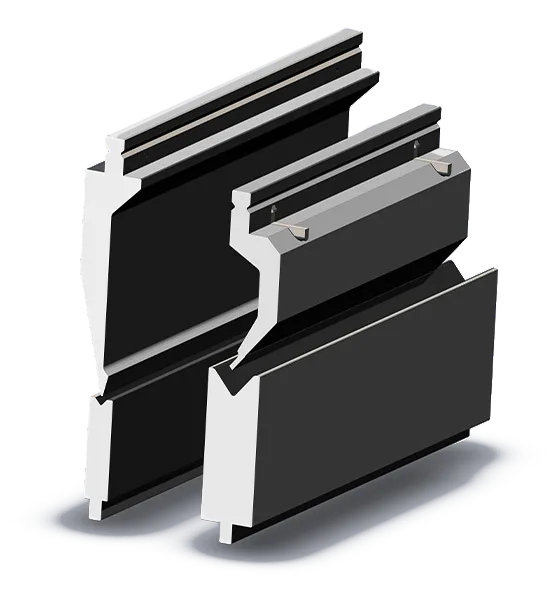
Thickness directly affects the pressure required for bending. Thicker sheets need stronger tooling to avoid deformation.
· Thick Plates: Benefit from high-strength alloy steel tools that resist deflection and absorb impact.
· Thin Sheets: Can be handled with standard hardened steel, but may require more precise tooling to avoid overbending or distortion.
· Sharp Radius Bends: Require precision-ground tools with tight tolerances to maintain accuracy and avoid cracking.
The tighter the bend radius, the more important it becomes to use tooling that delivers consistent alignment and minimal wear.
Production Volume and Frequency
Your press brake tooling choice also depends on how often you use it and in what volumes.
· High-Volume Production: Calls for wear-resistant materials like quenched steel or nitrided tools to reduce downtime.
· Low-Volume, High-Mix Jobs: Might benefit more from flexible, cost-effective tooling that’s easier to replace or adjust.
Balancing your production style with your tooling investment helps control costs and improve efficiency.
Cost vs. ROI
Premium tooling materials cost more upfront but offer longer service life, better accuracy, and fewer replacements. If your operation involves frequent bending of tough materials, the cost savings over time can be substantial.
On the flip side, for occasional or light-duty jobs, high-end tooling might not offer a good return. The key is to evaluate tooling costs in the context of your long-term production needs.
Common Misunderstandings in Press Brake Tooling Material Selection
Choosing the wrong press brake tooling material can lead to poor results, tool damage, or unnecessary expenses. Misconceptions are common, especially when decisions are based on assumptions rather than application-specific analysis.
Many assume that the hardest tool is always the best. While hardness contributes to wear resistance, overly hard materials can lack the toughness needed to handle shock loads or bending of thick materials. Brittle tools may crack or chip under stress, especially if the material being bent is also hard.
Even high-quality tool steel can underperform if the heat treatment is inconsistent. Uneven hardness across the tooling surface can result in unpredictable bending angles or premature wear. Always consider how the tool was processed, not just its raw material.
Expensive doesn’t always mean better. Imported tooling materials may carry a premium price tag without offering real advantages for your specific application. Unless your process demands ultra-high precision or unique coatings, local or standard options may be just as reliable.
Avoiding these mistakes starts with understanding what your bending tasks truly require. Tooling selection should always be a balance of performance, durability, and cost-effectiveness, not driven by brand names or single attributes.
Conclusion
Choosing the right press brake tooling material isn’t just about picking what’s hardest or most expensive—it’s about finding the best match for your specific application. Whether you’re bending stainless steel, aluminum, or high-strength alloys, your tooling material should align with your material type, sheet thickness, production volume, and desired accuracy.
At LONGBOW, we understand how critical this decision is. With years of experience in sheet metalworking machinery and tooling, we offer not only durable and precise tooling solutions but also expert guidance to help you make the right choice for your unique applications. If you’re unsure about which tooling material fits your bending process, or you need assistance with custom applications, don’t hesitate to reach out. Our team is here to help you bend smarter, faster, and more accurately.