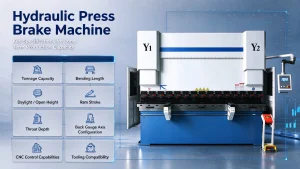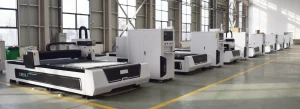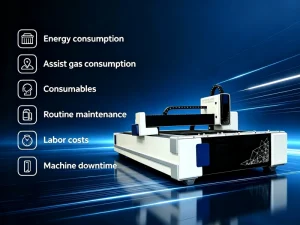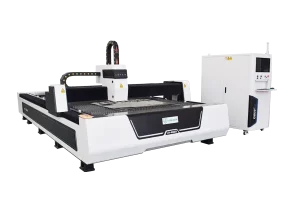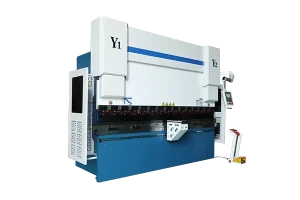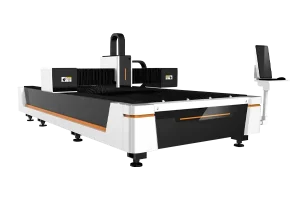
As global manufacturing moves toward higher precision and automation, the demand for advanced CNC press brake machines continues to grow across industries such as automotive, HVAC, and metal fabrication.
A well-selected CNC press brake can significantly influence production accuracy, operating costs, and delivery timelines. For example, manufacturers handling stainless steel sheets between 1.5 mm and 6 mm thickness often require bending tolerances within ±0.02 mm. Achieving this level of consistency depends heavily on machine configuration, control systems, and structural stability.
Understanding the key features behind high-performance machines helps businesses avoid costly mistakes and ensures the equipment aligns with real production needs. The following guide breaks down the most important factors to consider before making a purchase decision.
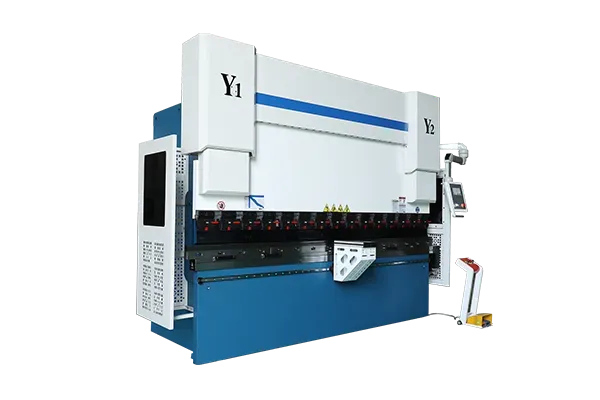
10 Key Features to Look for in a High-Precision CNC Press Brake
1. Advanced CNC Controller System
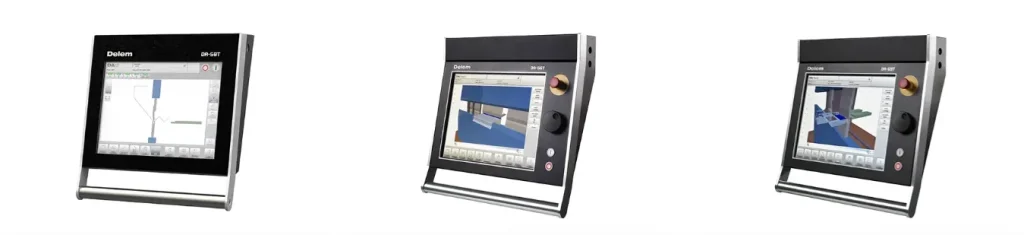
The CNC controller determines how efficiently operators can program and execute bending tasks. Modern systems support:
- 2D/3D graphical programming
- Automatic bend sequence calculation
- Real-time angle correction
When producing complex parts with multiple bends, an advanced controller can reduce programming time by 30–50% compared to manual input methods. This is especially valuable for small-batch, high-mix production environments.
2. Multi-Axis Backgauge System
A high-precision CNC press brake typically includes 4 to 8 controlled axes, allowing accurate positioning of the workpiece.
In practical applications:
- A 4+1 axis system is suitable for standard bending tasks
- A 6+1 or 8-axis system is better for complex geometries, such as box structures or asymmetrical parts
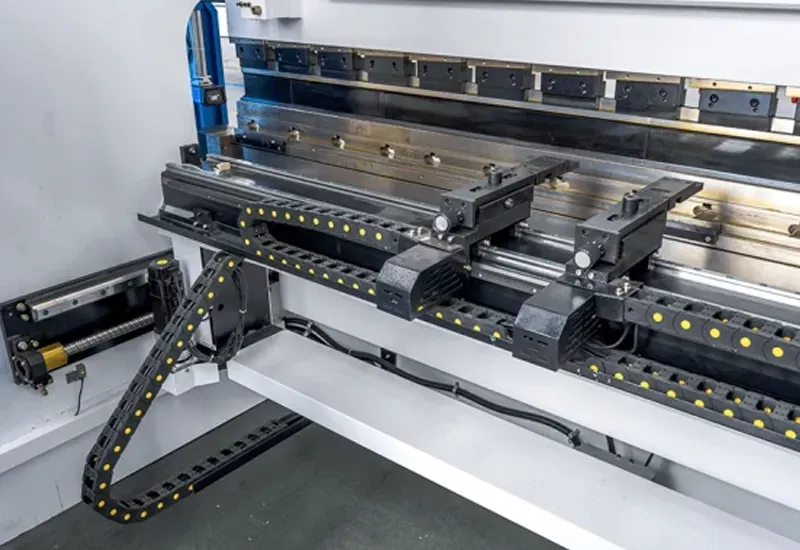
For example, in HVAC duct manufacturing, multi-axis backgauges can reduce repositioning time per part from 20 seconds to less than 8 seconds, improving overall throughput.
3. High-Precision Servo Motor Technology
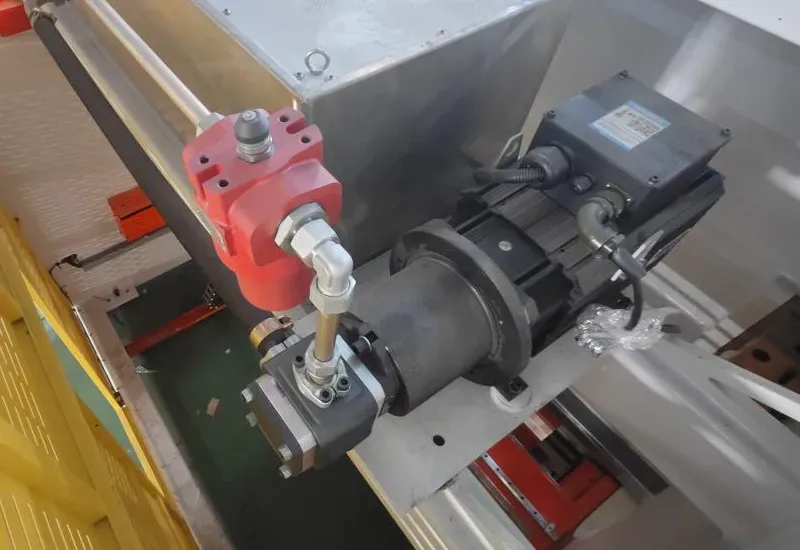
Servo-driven systems improve both speed and accuracy. Compared to conventional hydraulic machines:
- Positioning accuracy can reach ±0.01 mm
- Idle energy consumption can be reduced by up to 25–30%
In a typical 8-hour production shift, this energy saving translates into measurable cost reductions, particularly for factories running multiple machines simultaneously.
4. Automatic Crowning System
When bending long metal sheets (e.g., 2.5–4 meters), slight deflection in the machine frame can lead to inconsistent angles.
An automatic crowning system compensates for this by adjusting the bed curvature dynamically.
- Without crowning: angle deviation may reach 1–2 degrees at the center
- With crowning: deviation is reduced to within ±0.2 degrees
This is critical for industries requiring uniform bends, such as electrical enclosures and precision cabinets.
5. High-Quality Frame Structure
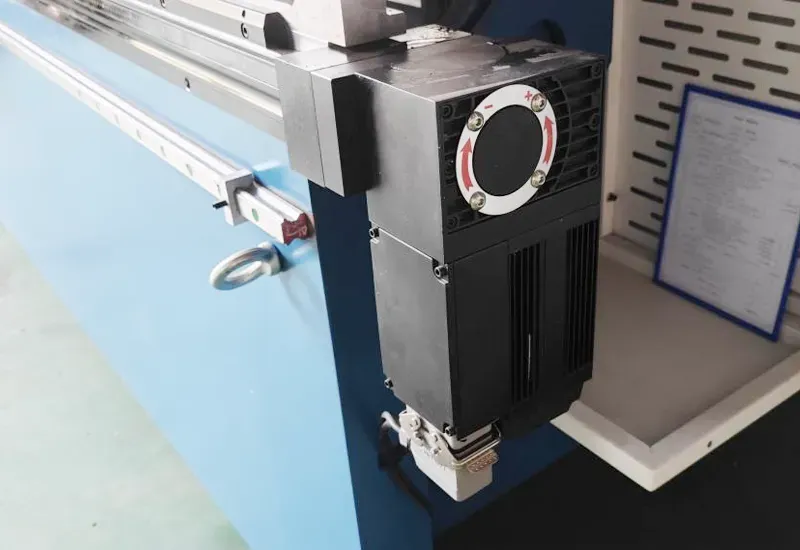
The frame directly affects long-term stability. High-end CNC press brakes typically undergo:
- Welded steel fabrication
- Vibration aging or heat treatment
- Precision machining
A properly treated frame can maintain accuracy over 5–10 years of continuous use, even under high-load conditions such as bending 8–12 mm carbon steel plates.
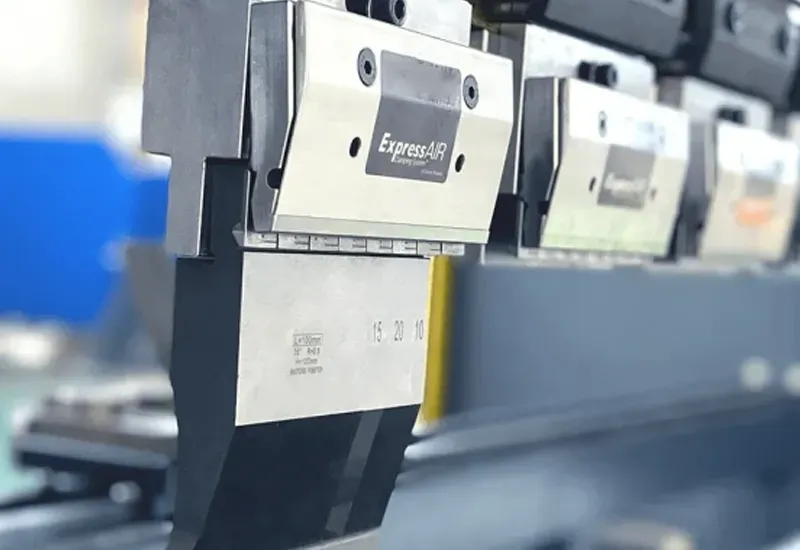
6. Precision Tooling Compatibility
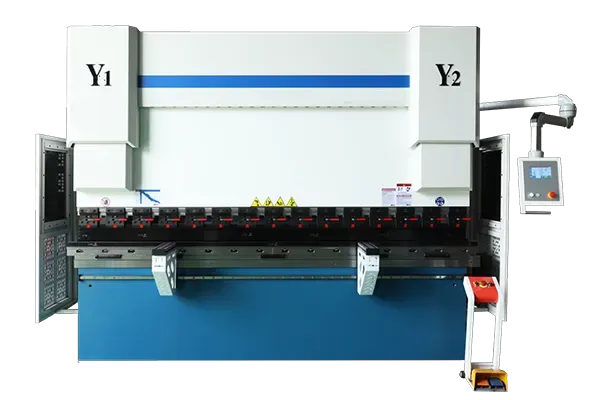
Tooling flexibility allows manufacturers to adapt to different production requirements. A good CNC press brake should support:
- Multiple tooling standards (European, American, WILA)
- Quick clamping systems (tool change within 2–5 minutes)
For example, switching from V-dies for thin sheets to larger openings for thicker plates becomes faster and more efficient, minimizing downtime.
7. Energy Efficiency and Eco-Friendly Design
Energy consumption has become a key cost factor. Modern CNC press brakes integrate:
- Servo-hydraulic systems
- On-demand motor operation
- Reduced oil heating cycles
In real factory conditions, this can lower annual electricity costs by 15–30%, depending on usage frequency.
8. Safety Features and Compliance
Safety systems are essential for both compliance and productivity. Typical configurations include:
- Laser protection systems
- Light curtains
- Emergency stop mechanisms
For example, laser safety systems allow operators to work closer to the bending area without compromising safety, improving efficiency in precision tasks.
9. Automation and Integration Capabilities
Automation is increasingly important in large-scale manufacturing. CNC press brakes can be integrated with:
- Robotic arms for automatic loading/unloading
- MES systems for production tracking
- IoT platforms for real-time monitoring
Factories adopting robotic bending cells often see productivity improvements of 30–50%, especially in repetitive production runs.
10. After-Sales Support and Service
Reliable after-sales service ensures long-term performance. Key factors include:
- Spare parts availability within 24–72 hours
- Remote diagnostics for troubleshooting
- Operator training programs
For example, remote support can reduce machine downtime from several days to just a few hours in many cases.
Conclusion
Selecting the right CNC press brake requires a balanced evaluation of precision, efficiency, and long-term reliability. Features such as advanced CNC control systems, multi-axis backgauges, and energy-efficient servo technology play a direct role in improving bending accuracy and reducing operating costs. When these elements are combined with strong after-sales support, manufacturers can achieve stable production performance and consistent product quality over time.
Looking for a reliable CNC press brake solution?
Explore our precision CNC press brake designed for high accuracy, energy efficiency, and flexible automation. Whether you are handling custom sheet metal fabrication or large-scale production, our machines are engineered to meet diverse industrial requirements.
Contact our team today to get:
- Tailored machine recommendations based on your application
- Detailed technical specifications and pricing
- Expert support for installation, training, and after-sales service